


How to properly pack a work of art before transport?
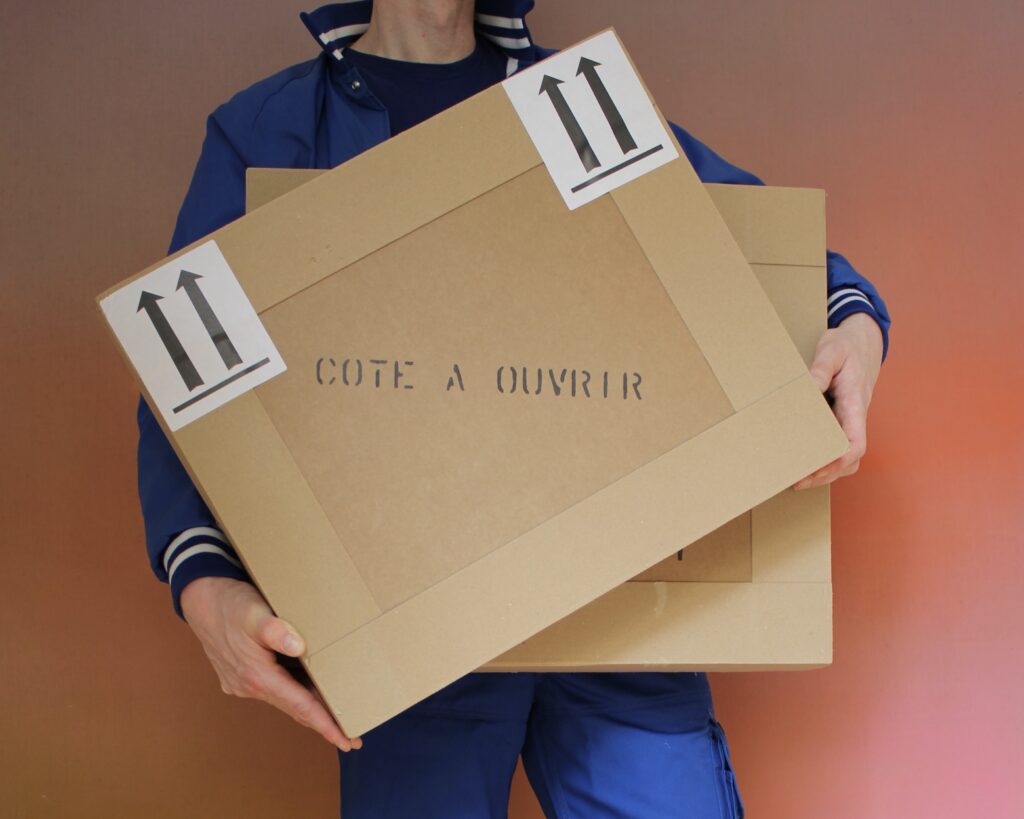
Artwork transport is never a trivial matter. Behind every move, whether it’s a museum loan, a temporary exhibition, or a delivery to a private collector, lies a delicate mission: preserving the integrity of a unique object.
A poorly designed packing solution can destroy years of artistic work or centuries of heritage. Conversely, proper, professional art packaging allows artworks to travel thousands of kilometers without the slightest damage.
Before considering logistics, mastering the packing of an artwork before transport is essential.
Preparing the Artwork
Good packing always begins with careful preparation. This diagnostic phase helps adapt materials and packaging methods to the nature of the artwork.
Checking the Condition of the Artwork
Before any packing, carry out a detailed condition report.
Photograph the piece from multiple angles, under natural light, and note any existing defects: cracks, delamination, yellowing, scratches…
This report is not a mere formality, it certifies the artwork’s initial state in the event of damage and identifies fragile areas that need reinforced protection.
👉 Good to know: In museums and galleries, a condition report is mandatory. It is completed by a registrar or conservator before every move and counter-signed upon arrival.
Preparing the Surface
Before any handling, wear cotton or nitrile gloves to avoid transferring skin oils or acids onto the artwork.
Gently dust the surface with a soft brush, no solvents or sprays.
For textile pieces, ensure they are completely dry. Photographs and drawings must be kept away from direct light before packing.
If the piece is a freshly painted oil or acrylic, allow sufficient drying time before crating. A plastic film applied too soon can trap moisture and damage the paint layer.
Choosing the Right Materials
Each material serves a purpose: mechanical protection, climate control, or chemical barrier.
A well-designed artwork packing system combines several complementary layers, each with a specific role.
Surface Protection
The first layer is the contact protection. It must be chemically neutral and soft to the touch.
Recommended materials include:
- Acid-free tissue paper : ideal for paintings or prints.
- Non-woven fabric : used by museums for its breathability and water resistance.
- Micro-perforated polyethylene film : shields from dust while allowing moisture to escape.
Avoid newspaper or food-grade plastics, which are often acidic or sticky.
Protecting Corners and Edges
Frame corners, crate edges, and sculpture extremities are particularly vulnerable.
Use polyethylene foam corners, double-wall cardboard reinforcements, or custom-fit shells. These prevent chips, cracks, or distortions from even minimal pressure.
For gilded or carved frames, never apply adhesive tape, use tension, or Velcro-held protections instead.
Rigid Containers
This is the core of protection: the crate. Several types exist depending on the required protection level.
| Type of Crate | Advantages | Best For |
| Simple wooden crate | Durable, customizable, reusable | Short-distance ground transport |
| Climate-controlled crate | Regulates temperature and humidity | Old paintings, sensitive works |
| Aluminum flight case | Lightweight, reusable, sturdy | Temporary exhibitions, touring shows |
| Polypropylene crate | Watertight and cost-effective | Contemporary or lightweight artworks |
👉 Good to know: The wood used must comply with ISPM15 standards to prevent biological contamination during international transport.

Common Art Packing Methods
Once the artwork is prepared and materials selected, the packing phase begins, always in a clean, dry, dust-free environment.
The Three-Layer Method
The principle of “triple packing” is standard in fine art transport:
- First layer (contact): protects the surface.
- Second layer (cushioning): foam, bubble wrap with kraft, or polyethylene foam.
- Third layer (rigid): cardboard or crate, ensuring mechanical resistanc
Each layer should fit snugly without compressing the work, allowing for slight thermal expansion.
Packing Framed Paintings
For a painting, first place a rigid cardboard sheet on the front side, fixed to the frame without touching the canvas. Then add corner protectors, and finally wrap the entire piece in a dust-proof material.
If the painting is framed under glass, apply a crossed tape pattern on the glass to prevent shattering in case of breakage.
👉 Pro tip: For large formats, use heat-shrunk film, applied gently to ensure uniform tension without direct contact with the painted surface.
Sculptures and Bulky Objects
Sculptures require three-dimensional bracing logic.
The piece must be suspended or immobilized within the crate without touching the walls. Foams of varying densities absorb vibrations while maintaining stability.
For porous materials (plaster, terracotta, old wood), avoid airtight plastics that cause condensation. Opt for breathable materials such as siliconized kraft paper.
👉 Did you know? Some monumental sculptures are packed in situ within modular, dismantlable crates, allowing on-site unpacking without heavy handling.
Logistics and Transport of Artwork
Once packing is complete, the logistics phase is just as critical. Even the best crate loses its efficiency if transport isn’t properly managed.
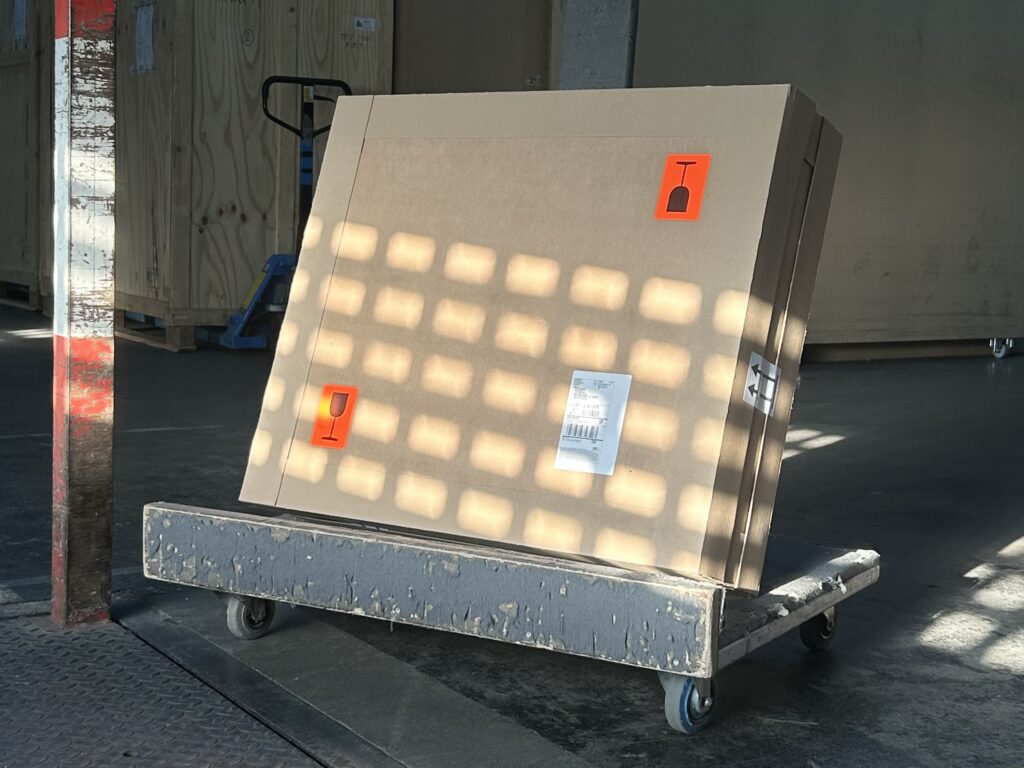
Before loading, clearly label the crate: handling direction, “fragile” notice, “this side up” arrows, and center of gravity markings.
Choosing the Right Carrier
Hiring a fine art transport company guarantees safety. These specialists provide:
- Air-suspension vehicles
- Anti-vibration securing systems
- Drivers trained in fine art handling
- Climate-controlled storage zones
Some also offer dedicated convoy services, with no transshipment or third-party handling.
👉 Good to know: Certified art transporters hold customs authorization (AEO) and insurance policies specific to high-value artwork handling.
Transport Conditions
Sensitive artworks must be transported under stable temperature (18–22 °C) and controlled humidity (45–55 %).
Sudden variations can cause cracks, warping, or mold.
For long-distance shipments, shock and humidity sensors can be integrated into the crate, allowing real-time monitoring of transport conditions.
Insurance and Documentation
An artwork should always be covered by “nail-to-nail” insurance, effective from removal to final installation.
Keep carefully:
- The condition reports (before departure and upon arrival)
- The transport waybill signed by the carrier
- The insurance policy and lot number
These documents ensure traceability and facilitate any potential claims.
Best Practices and Common Mistakes
Perfect packing relies as much on technique as on discipline.
Best Practices
- Allow enough time, never rush the packing of a work of art.
- Test crate stability before shipment.
- Write specific handling instructions on the crate (fragile, orientation, special handling).
- Always work with at least two people for artworks larger than one meter.
Mistakes to Avoid
- Applying bubble wrap directly to the artwork’s surface.
- Sealing a crate airtight without moisture absorption.
- Transporting artwork in a non-climate-controlled vehicle.
- Failing to document contents before sealing.
👉 Did you know? According to the Smithsonian Museum, 65 % of art damage occurs during handling or unpacking, not during transport itself.
Upon Arrival: Reception and Installation
Unpacking is just as critical as packing. It must be done in a clean, temperature-controlled, draft-free environment.
Unpack in reverse order, layer by layer, keeping cutting tools away from the artwork.
Keep all packing materials: they may be reused for a return or future exhibition.
Immediately inspect the piece and compare it to the initial condition report. In case of damage, take photos and notify the carrier within 48 hours.
If the artwork requires installation (hanging, mounting, display case), entrust it to a qualified registrar or technician equipped with the proper tools and fittings.
Packing an artwork properly before transport means anticipating the unpredictable.
Each layer, each material, each movement matters. This precision is not a constraint but a form of respect for the artist’s work and the cultural heritage it represents.
A professional art packing service guarantees peace of mind for collectors, galleries, and institutions alike. When entrusted to a fine art transport expert, it becomes the safest link in a logistics chain where precision is non-negotiable.
Packing and Transporting Artworks with Moviiu: Security, Speed, and Innovation
Because proper packing only makes sense within a well-controlled logistics chain, Moviiu has developed a complete solution that reinvents international fine art transport.
As the first digital platform dedicated to art logistics, Moviiu combines technological innovation with heritage expertise to deliver a smooth, fast, and entirely secure experience, from quote request to final delivery.
Thanks to our all-in-one solution, collectors, galleries, artists, decorators, and auction houses can organize door-to-door art transport in just a few clicks, with transparent pricing, real-time tracking, and tailored insurance options.
Our custom packing solutions, designed by specialized packers, provide optimal protection for your paintings, sculptures, antiques, or design pieces, whether they travel to Paris, Berlin, or Zurich.
Why Choose Moviiu for Packing and Transporting Your Artworks?
- Instant quote with no sign-up: get a full price in under 2 minutes.
- Custom packing: our packing kits, shipped within 24 h, let you protect your artwork easily with a detailed video tutorial.
- Smart tracking: follow every step of your shipment from preparation to delivery in your customer dashboard.
- Flexible, secure delivery: standard delivery, on-site installation, or hanging — tailored to your needs and budget.
Moviiu simplifies every step of fine art transport, from preparation and packing to final delivery , in just a few clicks, with no intermediaries and zero stress.
👉 Did you know? Moviiu ships artworks to over 40 countries with real-time tracking and customizable insurance, offering a more transparent and accessible international art transport experience than ever before.
Try Moviiu Now
How to Properly Pack a Work of Art Before Transport?
Whether you’re a private collector, professional, or institution, discover a new art transport experience: fast, reliable, and digital.
Our platform guides you step-by-step, from selecting the right packing materials to scheduling delivery, ensuring the best safety-to-efficiency ratio on the market.
👉 Get your instant quote and entrust your artworks to a team that truly understands their value.
