


Impressionism: everything you need to know in 3 minutes
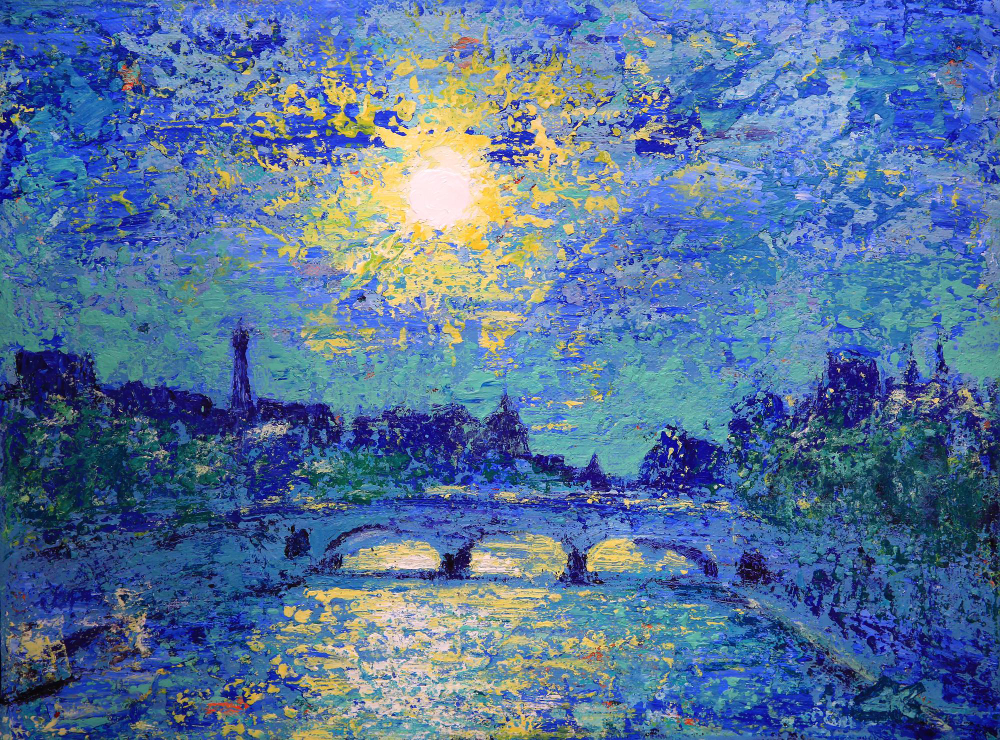
Impressionism is the most popular pictorial movement in the history of art. Born in France in the 1860s, it broke academic conventions, transformed the way light was painted and imposed a radically new vision of reality. Yet its beginnings were chaotic: official refusals, press mockery, public incomprehension.
Today, Impressionist paintings are among the most admired and most valuable works in the world. From Monet to Renoir, from Degas to Berthe Morisot, this movement laid the foundations of modern art.
The origins of Impressionism
In the mid-19th century, French painting was dominated by the Académie des Beaux-Arts. The rules were strict: religious, mythological or historical subjects, precise drawing, smooth finishes, rigid compositions. The annual Paris Salon was the only place where an artist could make a name. Those who deviated from these norms were simply rejected.
In this context, a group of young painters began meeting at the Café Guerbois, in the Batignolles district of Paris. Around Édouard Manet, already a controversial figure after the scandal of Le Déjeuner sur l’herbe in 1863, gathered Claude Monet, Pierre-Auguste Renoir, Alfred Sisley, Frédéric Bazille, Edgar Degas, Camille Pissarro and Berthe Morisot. They all shared the same conviction: painting had to free itself from the academic straitjacket.
1874: the exhibition that changes everything
On 15 April 1874, thirty artists exhibited 165 works in the former studio of photographer Nadar on the Boulevard des Capucines in Paris. It was the first Impressionist exhibition. The public was baffled. The press was merciless. Satirical journalist Louis Leroy published a mocking article in Le Charivari, stopping in front of a painting by Monet entitled Impression, Sunrise. He wrote: “Impression, I was sure of it. I told myself that since I’m impressed, there must be some impression in there.”
Unwittingly, Leroy had just named the movement. The artists, initially irritated by this label, ended up claiming it from 1877 onwards. In total, eight Impressionist exhibitions were organised between 1874 and 1886.
The characteristics of Impressionism
Behind the common label lies a great diversity of approaches. Monet, Degas, Renoir and Cézanne painted in very different ways. But several fundamental features unite them and make it possible to identify an Impressionist work at first glance.
Light at the heart of everything
The obsession of the Impressionists is natural light and its changing effects. They do not seek to represent an object as it is, but as it appears at a specific moment, under a given light. This is why Monet painted Rouen Cathedral more than thirty times, at different times of day and in different seasons, to capture the variations of light on the stone.
Painting in the open air
Before Impressionism, painters worked almost exclusively in the studio, from preparatory sketches. Two technical innovations made outdoor work possible: the invention of the pliable tin paint tube by American John Rand in 1841 and the production of lighter, portable easels. Impressionist painters were able to set up along the Seine, in the fields of Normandy or in the streets of Paris to paint directly from life.
Visible brushwork and pure colours
The smooth, meticulous finish of academic painting was over. The Impressionists applied colour in rapid, short, visible strokes, often juxtaposed rather than mixed on the palette. Seen up close, the canvas seems chaotic. From a distance, the colours blend optically and restore the vibration of light. They favoured primary colours and their complements, abandoned dark tones and replaced black in the shadows with violets, blues and greens.
Subjects drawn from everyday life
Impressionism turns its back on mythological and religious scenes. The painters represent the world around them: landscapes along the Seine, train stations, guinguettes, café scenes, horse races, opera dancers, boating parties. This focus on modern life and the leisure activities of the Parisian bourgeoisie marks a break as profound as the technique itself.

The great names of Impressionism
The movement brings together very different personalities, united by a collective adventure lasting around a dozen years. Here are the key figures.
Claude Monet (1840–1926) is the emblematic figure of the movement. His painting Impression, Sunrise gave Impressionism its name. His series (Rouen Cathedrals, Haystacks, Water Lilies) perfectly illustrate the quest for fleeting light. His garden at Giverny has become a major artistic pilgrimage site.
Pierre-Auguste Renoir (1841–1919) is often called the “painter of happiness”. His canvases celebrate the joy of life, popular festivities and feminine beauty. Dance at Le Moulin de la Galette (1876), with its plays of light filtering through the foliage, remains one of the masterpieces of the movement.
Edgar Degas (1834–1917) stands out for his urban subjects: dancers, café scenes, horse races. Less attached to plein air than his companions, he excelled at rendering movement and poses captured on the spot. His pastels of ballerinas are among the most famous images in the history of art.
Berthe Morisot (1841–1895) brings an intimate sensibility to the movement. Her scenes of domestic life, gardens and portraits of children are painted with an airy, luminous touch. Manet’s sister-in-law, she was one of the few women to have exhibited from 1874 onwards.
Camille Pissarro (1830–1903) is considered the “dean” of the group. The only artist to have taken part in all eight Impressionist exhibitions, he played an essential unifying role. His rural landscapes and market scenes reveal a rare attention to the peasant world.
Alfred Sisley (1839–1899) remains the purest landscapist of the group. His views of the Paris region, notably the flood scenes at Port-Marly, display remarkable atmospheric sensitivity.
From scandal to recognition
Recognition of Impressionism was neither immediate nor linear. After the first exhibitions, sales were rare and prices derisory. Several painters lived in great financial hardship. Monet himself experienced very difficult years before becoming famous.
Art dealer Paul Durand-Ruel played a decisive role in the success of the movement. Convinced very early on of the genius of these painters, he bought large numbers of their canvases, sometimes at the risk of his own bankruptcy. In 1886, he organised a major exhibition in New York that met with considerable success among American collectors. It was a turning point: Impressionism conquered the international market.
The support of influential critics such as Émile Zola and Théodore Duret, the evolution of public taste and the arrival of a new generation of collectors finally established the movement in the 1890s. Today, Impressionist works rank among the most expensive ever sold at auction.
👉 Did you know? Collector Gustave Caillebotte, himself an Impressionist painter, bequeathed a collection of 67 Impressionist paintings to the French state upon his death in 1894. After heated debate, only 38 canvases were accepted. Today they form the core of the Impressionist collection at the Musée d’Orsay.
The legacy of Impressionism
Impressionism is not limited to a historical period. It paved the way for all the avant-gardes of the 20th century. Neo-Impressionism (Seurat and Signac), Post-Impressionism (Cézanne, Van Gogh and Gauguin), then Fauvism and Expressionism all stem directly from it. By freeing colour from drawing and asserting the subjectivity of the artist’s eye, the Impressionists pushed painting into modernity.
The movement continues to exert universal fascination. Impressionist exhibitions attract millions of visitors around the world every year. The Musée d’Orsay in Paris, the Musée de l’Orangerie, the Musée Marmottan Monet and the Musée des Impressionnismes in Giverny remain must-see destinations to admire these masterpieces in person.
Transporting an Impressionist work: a preservation challenge
Impressionist paintings are among the most frequently transported works in the world, between loans for temporary exhibitions, auction house acquisitions and transfers between private collections. Their specific fragility, linked to the variable thickness of the paint layer and to the sensitivity of pigments to light, requires specialised professional transport.
The risks are real: shocks, vibrations, changes in humidity and temperature can irreversibly damage a canvas. For a collector or gallery owner, entrusting the transport of a work to a non-specialist provider represents a risk disproportionate to the value of the piece.
Moviiu, our 100% digital fine art transport platform, secures every shipment. We offer instant quotes, packing designed according to the most demanding fine-art logistics standards, door-to-door shipping, flexible transport insurance and real-time tracking.
Whether you own an Impressionist work or any other valuable piece, Moviiu simplifies logistics and secures every shipment.
➡ Get your free quote in 1 minute
FAQ – Impressionism
When did Impressionism begin?
The movement emerged in France in the 1860s. The group’s first official exhibition took place in 1874, in photographer Nadar’s studio in Paris. The term “Impressionism” was coined on this occasion by critic Louis Leroy.
What is the difference between Impressionism and Post-Impressionism?
Impressionism focuses on capturing light and the moment. Post-Impressionism, which emerged from 1886 onwards with Cézanne, Van Gogh and Gauguin, goes further by exploring structure, expressive colour and the emotional dimension of painting.
What is the most famous Impressionist painting?
Impression, Sunrise by Claude Monet (1872) is the founding painting of the movement. Other emblematic works include Renoir’s Dance at Le Moulin de la Galette, Degas’s The Dance Class and Monet’s Water Lilies.
Where can you see the finest Impressionist works?
The Musée d’Orsay in Paris houses the most important collection in the world. The Musée de l’Orangerie (Water Lilies), the Musée Marmottan Monet and the Musée des Impressionnismes in Giverny are also must-see venues.
Why was Impressionism rejected at the beginning?
Impressionist paintings broke with all the Academy’s codes: subjects deemed minor, lack of smooth finish, visible brushwork, unusual compositions. The public and critics saw them as unfinished works, rough sketches. Recognition came gradually, thanks to the support of art dealers such as Durand-Ruel and critics such as Zola.