

Moviiu Insurance: Professional Security for Autonomous Transport
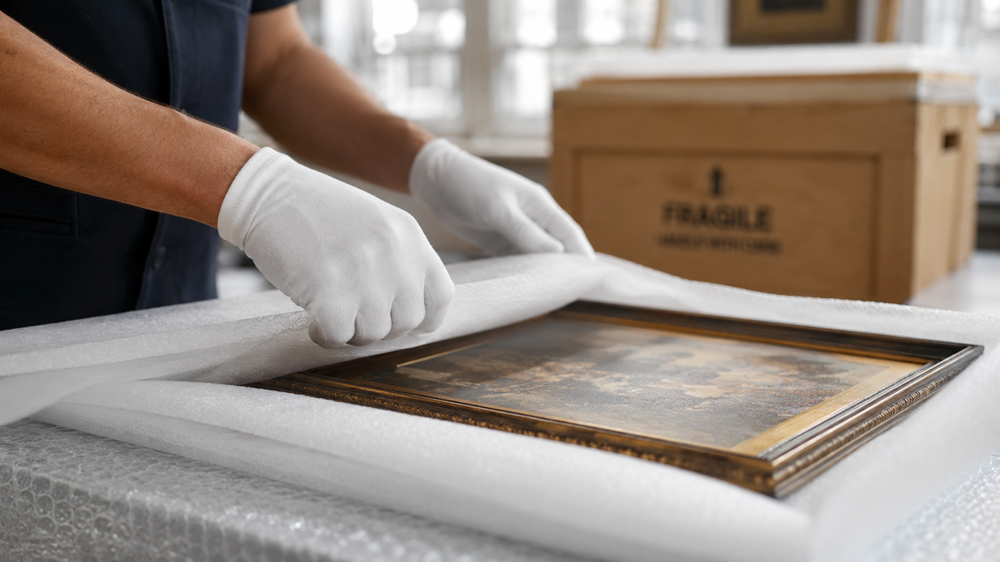
Moviiu provides a specialized insurance solution designed for high-value items, bridging the gap between standard courier limitations and the high standards of art logistics.
1. Two Pickup Modes, One High Standard of Protection
The insurance applies differently depending on the service level chosen, ensuring a clear chain of responsibility from the start.
A. Autonomous Mode (Self-Service Shipping)
- Exclusive Moviiu Packaging: Coverage is strictly limited to items shipped using patented Moviiu kits. Self-packed items cannot be insured as Moviiu cannot guarantee the quality of the protective barriers.
- Mandatory Photo Protocol: To validate the insurance, the sender must document the process. You must take clear photos of the item before the box is closed (proving its condition) and the box once sealed with the transport label visible.
B. “White Glove” Mode (Premium Collection)
- On-site Condition Report: A specialized carrier performs a visual inspection of the item upon pickup.
- Pre-existing Damage Documentation: If any defects are visible (scratches, chips, etc.), the carrier will take professional photographs to create a definitive “reference state.”
2. Comprehensive “Ad Valorem” Coverage
Unlike standard couriers (who only pay approx. €23/kg), Moviiu covers the actual declared value:
- Full Value Coverage: Up to €100,000 for art and furniture. (More upon request)
- Zero Deductible: No out-of-pocket costs; the insurance pays from the first euro.
- Transparent Pricing: Typically 1% of the item’s value (with a minimum premium of €20).
3. A Fair Three-Tier Compensation Model
Moviiu doesn’t just pay for “breaks”; it handles claims with professional art standards:
- Minor Damage: 100% of restoration costs covered.
- Permanent Damage: Restoration costs PLUS compensation for the loss of value (depreciation).
- Total Loss: Full reimbursement of the declared value.
4. Critical Deadlines & Procedures
To maintain the validity of a claim, these timeframes are mandatory, The 3-Day Rule (72 Hours): Any damage must be reported to info@moviiu.com within 3 calendar days of receipt.
1. Common Dispute Scenarios at Arrival
- Concealed Breakage: The box appears intact, but the item inside is broken (e.g., a ceramic plate cracked by vibrations). This is typically classified as transport damage.
- Description Discrepancy: The buyer receives the item and claims they found a scratch or a repair not mentioned in the auction’s condition report. If the damage shows signs of age (dust in cracks, old glue), it is often considered a pre-existing condition.
- Handling Impact: The packaging is visibly dented or punctured, matching a specific impact on the artwork. This is a clear-cut case of carrier liability.
2. Determining Liability: The Chain of Evidence
Moviiu’s system uses a digital “chain of custody” to settle disputes quickly and fairly:
- The Auction House Proof (Departure): For the autonomous offer, the photos taken during the packing process are decisive. If the photos show the item was intact and properly secured in the Moviiu Kit, the auction house’s responsibility for the packing and initial state is legally confirmed.
- The Carrier Proof (Pickup): In “White Glove” mode, the carrier acts as a professional witness. By documenting any visible flaws before taking the item, they provide the auction house with a “certificate of condition” that prevents buyers from claiming pre-existing flaws were caused by the transport.
- The Recipient Proof (Arrival): The photos of the box (before opening) and the damaged item (inside the box) allow insurers to see if the packaging failed or if the carrier was negligent.
3. Arbitration Rules
- Consistent Evidence: If the departure photos show a “clean” item and the 3-day report shows a broken one, the insurer covers the claim. The auction house is not held liable.
- Contradictory Evidence: If high-resolution departure photos reveal a faint line or a repair that matches the “damage” reported by the buyer, the dispute is re-categorized as an auction description issue rather than a transport claim.
- Lack of Photos: If the mandatory photos were not taken during the autonomous packing process, the insurer may deny the claim, potentially leaving the auction house vulnerable to a direct dispute with the buyer.
Q&A: Deep Dive into Moviiu Insurance
Q: Why can’t I use my own box and still be insured?
A: Standard courier networks are rigorous. Moviiu’s insurance is tied to their patented packaging because it is tested to withstand specific drop and pressure scales. Using the Moviiu kit is the only way the insurer guarantees the protection.
Q: What serves as “Proof of Value” during a claim?
A: You will need to provide an official document such as a purchase invoice, an auction bill of sale (bordereau d’adjudication), or a certified professional appraisal.
Q: Does the insurance cover the item while the carrier is in my house?
A: Yes. The “Nail-to-Nail” policy is valid from the moment of pickup until final delivery.
Q: What if I already have my own business insurance?
A: Professional galleries can choose to opt-out of Moviiu’s insurance if their policy covers courier transit, or they can use Moviiu’s insurance as a “top-up” for values exceeding their own policy limits.
Q: What photos do I need if there is damage?
A: You must provide photos of: 1) The damage on the item, 2) The external packaging (even if it looks intact), and 3) The internal packing materials.
Q: Are transportation or packaging costs included in the insurance coverage?
A: No. The insurance covers only the declared value of the artwork; additional costs such as shipping or packaging fees cannot be claimed.
Q: How long does it take to get reimbursed?
A: The processing time depends on several factors. For higher-value items, an independent expert may be required. A full set of documents, including repair invoices, must also be submitted before the case can be finalized.